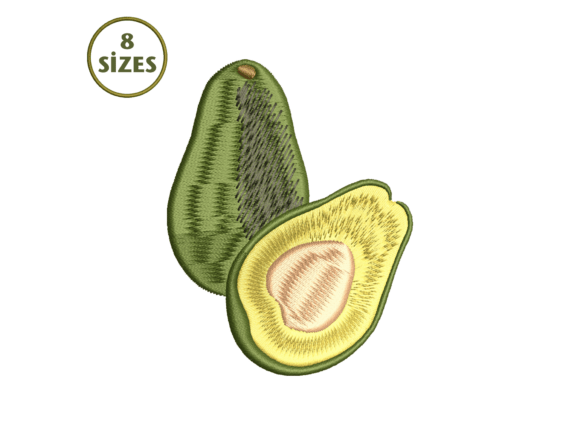
Avocado Fruit Embroidery: A Designer's Real-World Review
In the world of custom apparel and handmade goods, trends move fast, but some motifs remain evergreen. The avocado has firmly planted itself in that category. As a designer who has stitched everything from intricate logos to whimsical nursery decor, I approach every new machine embroidery design with a critical eye. Does it translate well from screen to fabric? Will it hold up after washing? Is it versatile enough for a small business owner to sell as a finished product? Today, I am putting the Avocado Fruit Embroidery file through its paces to see if it lives up to the hype.
First Impressions: Visual Personality and Layout
When I first opened the digital preview, the mood was immediately clear: playful, fresh, and undeniably trendy. This is not a hyper-realistic botanical study; it is a stylized representation perfect for modern branding or fun personalized gifts. The layout balances the iconic green flesh, the large central pit, and the textured skin in a way that suggests good flow for stitching. For an embroidery project, the clean lines are promising. It avoids the trap of being too cluttered, which often leads to thread bunching on home machines. The visual weight feels right for a medium-sized hoop, making it a strong candidate for a tote bag design or a cheeky accent on a denim jacket.
The design leans heavily into the Food category, but its appeal extends beyond just culinary themes. It speaks to a lifestyle aesthetic—think brunch culture, wellness brands, or eco-friendly shops. If you are an Etsy seller looking to refresh your inventory with something recognizable yet distinct, this motif offers a solid foundation. However, before committing to a production run, one must look past the pretty mockup and consider the mechanics of the stitch.
Stitching Performance: From File to Fabric
Let’s talk about how this actually stitches out. In my experience, fruit designs often rely heavily on fill stitch for the body and satin stitch for outlines or details like the pit. With Avocado Fruit Embroidery, the key to success lies in managing the transition between these two techniques. If the stitch density is too high, the fabric will pucker, especially on lighter materials like cotton tees or linen napkins. Conversely, if it is too sparse, the green color may look patchy.
I envision using this design on a heavy canvas tote bag for a local craft fair. On a sturdy substrate, the design should pop beautifully. The texture of the avocado skin can be rendered effectively with a slightly varied fill pattern, adding depth without requiring excessive thread changes. For custom apparel, such as a sweatshirt, the softness of the fleece might require a cutaway stabilizer to prevent the design from sinking into the loops of the fabric. Always remember to test the design on scrap fabric first. Check the thread colors against your specific material; a bright lime green might disappear on a dark navy hoodie unless backed by a white underlay.
Practical Applications for Your Craft Business
This design asset is incredibly versatile for a small shop product line. Here are a few scenarios where Avocado Fruit Embroidery shines:
- Kitchen Textiles: Imagine this stitched onto tea towels or aprons. It fits the kitchen theme perfectly and adds a professional touch to handmade products.
- Baby Items: Soft greens are soothing, and the shape is cute enough for onesies or bibs, provided the stitch count isn't too dense for delicate baby fabric.
- Embroidered Patches: Create standalone patches for hats or backpacks. The bold outline ensures the design remains legible even when detached from the main garment.
- Holiday Gifts: Use it for personalized stockings or gift tags during the summer season or year-round for "avocado lovers."
For commercial embroidery, consistency is key. If you plan to sell items featuring this design, ensure every stitch looks identical. Variations in tension or hoop size can ruin the uniformity of your brand. Using a printable mockup to visualize the final result on different backgrounds can save you time and money before you start sewing.
Navigating Challenges: Where Caution is Needed
While Avocado Fruit Embroidery is robust, it is not without its pitfalls. As a reviewer, I must highlight where this design requires careful handling. First, avoid using it on highly stretchy fabrics like spandex blends without significant stabilization. The pull of the stitches can distort the rounded shape of the fruit, turning a smooth curve into a jagged mess.
Secondly, consider the scale. If you attempt to shrink this design for a tiny cap brim or a cuff, the details of the pit and the skin texture may get lost. Running stitch details can become indistinguishable at very small sizes. Always confirm the minimum recommended hoop size before scaling down. Additionally, on dark fabrics, the contrast is vital. Without a proper white underlay, the green tones may look muddy rather than vibrant.
Another consideration is the frequency of washing. Kitchen items and kids' clothes go through the wash often. Dense fill stitch areas can sometimes crack or lift over time if the stabilizer wasn't sufficient. Inspect small details after the first wash cycle to ensure durability. If you are creating a holiday embroidery item meant to last for years, investing in quality thread and stabilizer is non-negotiable.
Strategic Advice for Designers and Sellers
If you decide to incorporate Avocado Fruit Embroidery into your workflow, here are my top practical notes for ensuring a professional outcome:
- Test Run is Mandatory: Never skip the test stitch on a scrap piece of the actual fabric you intend to use. This reveals issues with density and registration.
- Color Matching: Experiment with different shades of green. Sometimes a darker olive for the skin and a brighter chartreuse for the flesh creates better dimension than a single shade.
- Licensing Check: Remember that this is a digital product delivered in ZIP or RAR format. Instant download is convenient, but always verify the license terms. Can you sell the finished product? Are there restrictions on selling the digital embroidery file itself? Understanding these terms protects your business.
- Mockup Verification: View the design in black and white to check contrast levels. This helps identify areas that might blend together on certain fabrics.
- Stabilizer Selection: Match the stabilizer to the fabric weight. Woven fabrics need tear-away; knits usually demand cut-away or water-soluble options.
Ultimately, the value of an embroidery file lies in its execution. Avocado Fruit Embroidery offers a charming, marketable aesthetic that resonates with current consumer tastes. Whether you are a hobbyist making gifts for friends or a creative entrepreneur building a brand around quirky food themes, this design has potential. Just respect the mechanics of the machine, choose your materials wisely, and always prioritize quality control. When done right, the result is a delightful addition to any wardrobe or home decor collection that customers will love to show off.